

Last Updated on March 11, 2026 by Dante
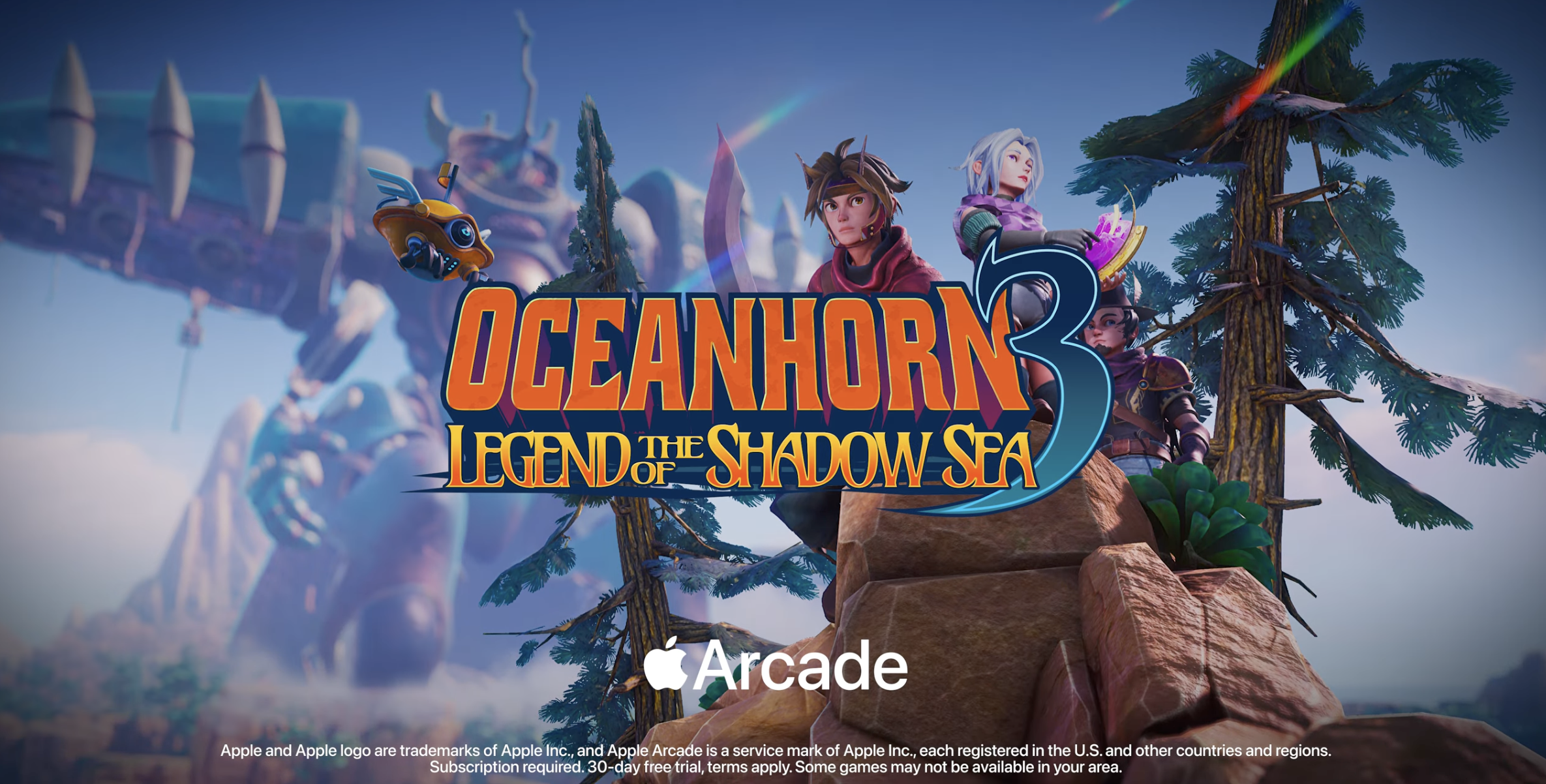
After seeing this really impressive trailer from Oceanhorn 3: Legend of the Shadow Sea, I just had to talk to their team about how far they’ve come since their first project more than a decade ago.
It’s very rare for indie projects to have the kind of continuity that Cornfox & Brothers have achieved with Oceanhorn. Their team has been iterating on this franchise successfully, and each work is better than the last. If you are an indie dev or interested in this game based on the gameplay trailer I just showed you, you’re going to want to read this interview I had with Heikki Repo, Creative Director at Cornfox & Brothers.
1. Oceanhorn 3 is set nearly a thousand years after the events of Oceanhorn 2. What inspired the decision to move the timeline so far forward, and how did that shape your approach to worldbuilding?
Both Oceanhorn 1 and 2’s stories were focused on telling about the fall of Arcadia, but we introduced a deeper lore and covered it a bit in both games. The idea that there were science fiction elements behind it all was no longer a secret – it was time to tackle that tecno-fantasy lore head-on.
With Oceanhorn 3, we are doing two things. First of all, we are resurfacing the optimistic premise of the first game – the world needs to be saved, cleansed from the evil that has a hold of it. The world is beautiful and worth fighting for. Secondly, we are introducing the deeper lore of Oceanhorn’s universe. Something that, at the time we created Oceanhorn 2, was just a vague building block of an underlying lore, is now presented in sharp focus, in the center of it all!
Oceanhorn 3 takes place in the era close to Oceanhorn 1, to finish the first trilogy of Oceanhorn games. There are some circles that close with this title, and new circles rise.
2. Looking back at the original Oceanhorn in 2013 and comparing it to where the series is today, how has your design philosophy evolved as a studio?
When we started Oceanhorn, it was a passion project, a love letter to the classics. It was about discovering that feeling of wonder we had playing those early console adventure titles like Zeldas or Mana titles. Everything we did came from an instinct; we did what felt good and what inspired us. Now, that same instinct is combined with decades of game development experience! One philosophy has been that we don’t want to make the same game twice, and that’s why we are constantly evolving Oceanhorn into new directions.
Oceanhorn 1 also had unique ideas that were not seen in other Zelda-likes, for example, our challenge and spell system. In Oceanhorn 2, we were taking big and deliberate jumps towards blending the genres towards something completely different: Oceanhorn 2 was Zelda-like with party members that shared your adventure, and you could command them in puzzles and combat. Caster Gun with customizable Power-up shards is still a unique concept.
With Oceanhorn 3, we are taking leaps forward again, this time fleshing out the underlying RPG mechanics, such as combat and character progression, and establishing narrative mechanics that enable multiple parallel quests, for example.
So, I would say no – our philosophy hasn’t changed much. We are a bigger team now, but still work the same way, all the developers hang-out close quarters, in a single room!
3. What were the biggest challenges during the development of Oceanhorn 3, especially in terms of expanding scope and raising expectations after the previous installment?
Oh, where do I even begin! Oceanhorn 2 was a big step for us in terms of production value and visual fidelity, so the expectations were naturally even higher for the third game.
The challenge presented to us was threefold. First of all, a technical challenge. We are using Unreal Engine 5 now, but still want to support old hardware too, even some 10-year-old devices. We are using the source code version of Unreal Engine 5, which means we can make custom changes to the engine and ensure our games work and look almost identical across all devices.
Second, the visual quality, the first-person view demanded sharper textures and higher polygon characters, but we had marginally more resources than before. When making a vast game world like this, the risk was that our talent was spread too thin over the experience. We managed to avoid the pitfalls by planning the content carefully.
The third challenge was to match up the narrative and dramatic story of the second game, which people loved, while doing a new kind of game. Oceanhorn 3 is part of the series, but we are doing things a little bit differently, and finding that balance between delivering a large game world and crafting a focused narrative experience was a challenge. When Oceanhorn 1 and 2 had a linear story, Oceanhorn 3 is formed from several quest lines and side stories that make up the game’s whole story.
4. The new “Champion of Sol” leads this chapter. How did you approach designing a protagonist who feels new while still honoring the legacy of the series?
We wanted Oceanhorn 3’s Hero, the “Explorer,” to feel like his own individual character, just like the previous protagonists “Kid” and “Knight”. When the game begins, Hero is just a townboy, but thanks to the extraordinary events, he becomes a Champion of Sol, a warrior whose powers grow over the duration of the game. There would be plenty to talk about, Hero, but let’s leave it for our players to find out. In a nutshell, he ends up being a ‘normal’ person with extraordinary powers, and that makes him relatable.
Visually, we wanted Hero to look like the Oceanhorn protagonist, but let his role as a “Red Town Explorer” show. He has a survival knife (that looks like a Finnish Puukko), a walkie-talkie to keep in touch with other Red Town Explorers, and he is wearing the cape and tunic that protect him from piercing winds and driving rain.
Last, but not least, even if we follow the silent protagonist tradition, the hero in this game has dialogue response options! We played around with this idea already in Oceanhorn 2, but in this game, we went all in. This is a fun way to introduce his humour and character.
5. Themes of ancient Titans and long-forgotten powers seem central to Legend of the Shadow Sea. What core themes were you most interested in exploring in this story?
At its heart, Oceanhorn 3’s message is that the world is worth saving, and anything required from you is just to do your best. Without going into details about the story, the Titans were supposed to turn Gaia into a perfect world for its people. But the world is flawed and years long. Titans’ fate is a tale of caution: even the noblest intentions can go awry if left unsupervised. We also wanted to explore the idea of rediscovering lost knowledge and what it means to rebuild a civilization from scratch. Can Hero finish what the Titans started?
6. How do you balance deep lore continuity for longtime fans while ensuring the game remains accessible for newcomers?
That’s always a tricky one. We’ve always tried to integrate lore through environmental storytelling, subtle dialogue, and optional exploration rather than lengthy exposition dumps; however, in this game, we couldn’t completely avoid that since we are in the third part already, fourth if you count the spin-off game Chronos Dungeon. Longtime fans will recognize references and appreciate the connections to past games, but those new to the series shouldn’t feel lost or overwhelmed. You can absolutely enjoy Oceanhorn 3 without knowing anything about the previous titles, but if you do know them…well, there are rewards.
With Oceanhorn 3, however, we establish new lore, so both old and new players to the series will have much to discover!
7. Oceanhorn 3 has been described as a complete, self-contained experience. How did you structure the pacing and narrative arcs to make it satisfying as a standalone adventure?
When dealing with multiple narratives and character arcs, the writing process is almost like solving a very long-winding and complex logic puzzle, but when it’s done, you can trust the setup you have created. In Oceanhorn 3, there are side storylines and optional content, of course, but it’s all interwoven with the main narrative. The pacing is deliberate – it’s not about rushing to the next objective, but taking your time to explore the Shadow Sea and unravel its mysteries.
We ensure the standalone story is satisfying by basing it on the new lore that we have established for this game and center around the new characters. We are known for not shying away from dramatic twists, and the same is true in Oceanhorn 3.
8. Compared to earlier entries, how did you approach integrating exploration, puzzle design, and storytelling in this installment?
In Oceanhorn 3, we went to great lengths to redesign the combat, traversal, and quest systems. It is quite a bit different from the previous title, and for this reason, we came up with puzzle types that serve this title. Some test your platforming skills, some require you to investigate the environment, and some puzzles test your memory.
9. When building a new chapter in an established universe, how do you decide which threads from past games to revisit and which new ideas to introduce?
Ok, first of all, there are themes that are integral to the whole series, and those are the mysteries surrounding the ”Sacred Emblems” and the gods resting inside them. That offers an immediate jumping point to new games, as you need to consider what we want to say about them, or do with them. In Oceanhorn 1, you are collecting the Emblems. In Oceanhorn 2, you are returning the Emblems to their original homes. In Oceanhorn 3, the main quest revolves around the Sacred Emblems again, but with a new twist.
There is a very good reason why Oceanhorn 3 takes place close to the events of Oceanhorn 1 and why Blackhat is one of the side characters in the story, but why it matters is almost purely logical, and players will get it after we’ve done all the updates to the game. Added bonus is that we can get a loved character back, voiced again by our buddy Ray Chase. We have worked together for over 15 years already!
10. How has combat evolved in Oceanhorn 3 compared to previous titles, and what were your primary design goals when refining it?
Combat was maybe the biggest departure. We wanted something more dynamic, more strategic. The Skill Drawer allows players to pause and react in the heat of battle, making it feel more thoughtful. It’s not just about button-mashing; it’s about timing, positioning, and utilizing abilities effectively. We also wanted to create a more fluid experience that rewards skill and experimentation. It’s still an action RPG at heart, but it’s one that lets you truly *master* your abilities.
11. The addition of expanded traversal mechanics and more open environments suggests a shift in player mobility. What inspired that design direction?
We really wanted to improve the controls over the previous titles, which were designed mobile-first. One of the things that people didn’t find as genius as we did was the automatic jump system from Oceanhorn 2. It has now been replaced by proper jumping and platforming mechanics. The game is about adjectives, so in our game, you can jump, glide, climb, swim, dive, crawl, sneak, and dodge roll. We are especially proud of controls across all devices; even touch screen controls are better than ever, despite the added complexity.
12. In what ways does exploration in Oceanhorn 3 differ structurally or philosophically from exploration in Oceanhorn 2?
Oceanhorn 2 had a JRPG-style world map, which is not very common in Zelda-like titles. In Oceanhorn 3, we are returning to sea travel that we used in Oceanhorn 1. Everything is built around a central, vast sea called The Shadow Sea, with islands that are tiny self-contained open-worlds free for players’ exploration. The main narrative takes you through the island, but then you are free for exploration with the new tools and skills that you have acquired. We encouraged players to seek out the secrets after completing the island, and there are plenty of incentives to return to previously visited islands. The player can help people of Red Town settle on these islands, and as their settlements grow, more quests and some new locations open up.
13. The transition between sea-based travel and land exploration appears seamless. What technical or artistic breakthroughs made that possible?
That is actually not the case. We use level transitions, and as a small developer, we don’t even try to create a seamlessly loading world, as that would be a big technical challenge. Instead of fighting it, we are using it as a narrative strength. Players instinctively know, from watching movies and having played video games before, that these transitions, no matter how small, are also transitions of time. Time passes, and it is not quantified how much. This is very useful in times when establishing the game’s narrative.
14. Developing within the Apple Arcade ecosystem presents both opportunities and constraints. How did platform considerations shape development decisions?
We have always been an “Apple-first” developer with our titles. Our company was formed on the idea of creating console-style games for iPhones and iPads, so stepping into the Apple Arcade ecosystem felt very natural. I personally love the ability to play my save game on iPhone on the go and at home continue my game on Mac or on iPad with a game controller.
Something that developers like us don’t get enough credit for, compared to let’s say console developers, is the effort that we see to ensure the game works and looks great on various hardware configurations, from the latest Mac, as well as on various older devices. That affects how we make these games and how the game can look, but we are doing our best and working hard to make sure you can enjoy games, even if you don’t have the latest hardware.
15. The Oceanhorn franchise began with mobile roots and has since grown into a multi-platform 3D experience. How have fan expectations influenced your direction for this third installment?
Fan expectations can be tricky! You want to make people happy, but you also need to surprise them. We listened closely to feedback from the first two games—what people loved, what they didn’t love—and tried to incorporate that into Oceanhorn 3. But we also felt we had to push the boundaries, take risks, and evolve the series. We wanted fans of the original mobile games to see how far the franchise has come, and we wanted newcomers to be captivated by the world and the characters that we created.
16. Were there specific mechanics or narrative elements from earlier entries that you felt absolutely had to return in Oceanhorn 3?
For Oceanhorn 3, we wanted to bring back the world map where you sail between the islands, like in OH1, but combined with the dramatic and cinematic storytelling style and lovable characters similar to OH2. I would say almost everything else is new and refreshed from the ground up!
17. What has been the most surprising feedback from players or early previews so far, and has any of that feedback meaningfully influenced the final game?
That Oceanhorn 1 was the game of their childhood, and they love it. We are on the third part, and it takes about 5 years to make a game, so these people who were little kids can now be in their 20’s. I think Oceanhorn 3 has gotten a really positive reception on social media. We feel the warmth and love of the people who played the previous parts. They really cared about the stories we told and the experiences we provided. I hope they will have a heck of a time with Oceanhorn 3!
18. With Oceanhorn 3 representing your most ambitious project yet, how has Cornfox & Brothers grown or changed as a studio throughout this process?
We’ve definitely leveled up and scaled a bit, but we are still just a team of nine developers! The first game was made with three core members. Oceanhorn 2 with a handful of people – but now we are a team of nine!
Just like in any new project, Oceanhorn 3 required us to learn new tools and new workflows. We’ve gotten better at managing a larger scope, collaborating effectively, and iterating on feedback. It was challenging, but it really brought us together as a company. We now also have a better understanding of what we are capable of, and it’s really inspiring to see it.
19. Were there ideas or story elements that didn’t make it into this game that you hope to explore in the future?
The way it goes with these games, and I think it is pretty common, is that as you’ve just written the story for the game in all its details, you understand and see new paths for the story to grow. These can be in the past or in the future of the universe.
We barely scratched the surface in terms of lore and worldbuilding. There are great story ideas that came up when finishing Oceanhorn 2 that haven’t been realized. There are new story trajectories that emerged from Oceanhorn 3’s deeper lore that are just waiting to be explored – so, yes, there are definitely things we’re still dreaming about for future projects, but I think after Oceanhorn 3, it is going to be more difficult to tie in the titular monster into the game’s narratives. We still have ways, but it is better to start understanding that these games are not only stories about the ancient tormented mech, but everything that’s around it.
20. Looking ahead, how do you see the Oceanhorn series evolving — whether through new platforms, new gameplay styles, or entirely new narrative directions?
Oceanhorn 3 is the best game we have ever made, and its journey is just starting. We are happy the players are just getting their hands on it!
Cornfox as a company will not rest. In addition to updating Oceanhorn 3, we will never cease discovering new ideas or opportunities. Continuing with the Oceanhorn series is a no-brainer for us, but whatever we do, the most important thing is that we always stay true to the spirit of adventure, discovery, and wonder. We are a small studio, but we have big dreams!
Oceanhorn 3: Legend of the Shadow Sea is out now for Apple Arcade and all compatible devices (iPhone, iPad, Apple TV, and Mac).

Dante is Editor-in-Chief (Lord Hokage), which means he runs editorial and operations at BrandAnime. That means this whole thing was his idea, and he spends his time making stuff work and covering the latest anime and games. When he’s not doing 100 things at once, he’s usually… watching anime or playing games. His life isn’t that interesting, honestly.

Leave a Reply