

Last Updated on October 21, 2025 by Dante
The year was 2006, and I remember rushing home to catch the latest episode of Naruto. Orochimaru just invaded the Hidden Leaf Village and was about to throw down with the Third Hokage.
Then, this psychopath did something that traumatized many of us kids and teens.
He ripped his fucking face off and laughed like the devil, right at 6pm:
See, that big ass CN logo at the bottom of this low-res video?
Yeah, that was childhood.
There’s a generation of us who grew up rushing home from school, flipping on Cartoon Network, and hearing that robotic voice say, “Welcome to Toonami.” It was a ritual. Backpack on the floor. Capri Sun in hand.
Blinking cathode glow filling the living room. For many Americans, myself included, that was our very first introduction to anime.
Not “anime” as we know it today—where you can stream entire seasons of Jujutsu Kaisen or Chainsaw Man on-demand—but anime when it was still taboo. Before it was cool. Before it was “content.”
Back when anime was the weird stuff your mom didn’t quite understand and your friends pretended not to like, but secretly did.
And somehow, Cartoon Network, the same channel that played Dexter’s Laboratory and Johnny Bravo, became the gateway.
Toonami didn’t just show us Japanese cartoons. It changed American animation forever.
The Dawn of Toonami (1997–1999): A Strange Experiment
When Toonami launched in March 1997, anime was still underground. There were conventions, sure, and older fans trading bootleg VHS tapes in college dorms. But anime wasn’t on television, not like this.
Toonami’s first host wasn’t even the sleek robot we remember. It was Moltar, the molten-faced director from Space Ghost Coast to Coast, who introduced action shows like Thundercats, Voltron, The Real Adventures of Jonny Quest, and Robotech. It was weird, bold, and surprisingly ahead of its time.
But in 1999, everything changed.
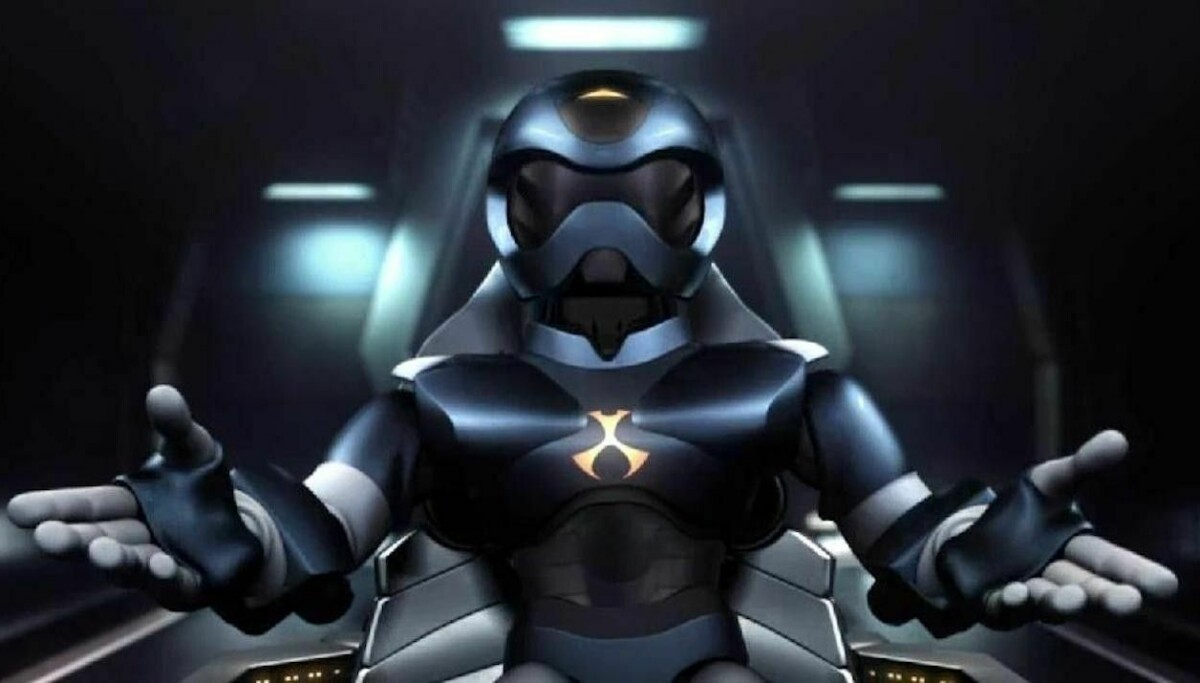
Cartoon Network retired Moltar and introduced TOM (Toonami Operations Module), a squat, silver robot voiced by the incomparable Steve Blum. TOM piloted the Absolution, a spaceship floating through digital space, curating anime like a DJ.
The interstitials were moody, futuristic, drenched in synths and glitch graphics. Suddenly, Toonami wasn’t just programming; it was a vibe.
For kids like me, this was our first taste of a world that felt bigger than Saturday morning cartoons. It was cinematic. Serialized. Emotional.
And at the heart of it all was one word that would define a generation: Dragon Ball Z.
The Era of Power Levels and Planet-Sized Emotions
If you were alive between 1999 and 2003, you remember running home for DBZ. You remember the agony of endless Frieza episodes. You remember trying to scream yourself into Super Saiyan mode in the mirror.
Like seriously, I thought Goku turning Super Saiyan would mop up Frieza in one go.
Yeah, that didn’t happen.
Toonami’s weekday block became appointment television. Dragon Ball Z, Sailor Moon, Gundam Wing, Outlaw Star, and Tenchi Muyo!, each one had its own cult following. And yet, Toonami made them feel like chapters of one big epic saga.
Unlike Saturday morning shows, these stories didn’t reset every week. Heroes died. Villains redeemed themselves. There were arcs, actual arcs, that demanded emotional investment. For American kids used to episodic slapstick, this was mind-expanding stuff.
Toonami even felt philosophical. Between shows, TOM would deliver these short monologues about perseverance, failure, and self-worth. “Believe in yourself,” he’d say, “and you’ll find your way.” It sounds corny now, but back then, it hit deep. These were life lessons disguised as filler bumpers.
Toonami was teaching us the vocabulary of shonen before we even knew what shonen was.
The Afternoon Ritual
By the early 2000s, Toonami was the after-school ritual.
I can still picture it: the glowing green timecard, the pulse of drum and bass under the promos, that robotic announcer saying, “Next… on Naruto.”
That’s when the second wave hit. Toonami’s lineup evolved, introducing a new generation of gateway anime, Naruto, Yu Yu Hakusho, Rurouni Kenshin, One Piece, and later, Samurai Jack, which, while technically American, felt spiritually aligned with anime storytelling.
It’s hard to explain what that felt like. Watching a show like Naruto at 6 p.m. on a weekday, on Cartoon Network, of all places, felt borderline rebellious. I still remember watching the Forest of Death and seeing Sasuke do this on live TV:
Sakura, who did this to you?
Damn…
There was no internet discourse, no streaming, no “spoilers.” It was raw discovery. Toonami didn’t feel like a corporate pipeline. It felt like a secret being broadcast to whoever was cool enough to tune in.
The Edge of Cool: How Toonami Shaped a Subculture
Toonami’s genius was in how it presented it. Everything about the block radiated style. The music. The typography. The sleek transitions. It was like stepping into a futuristic mixtape.
This was thanks to Sean Akins and Jason DeMarco, the creative minds behind Toonami. They understood that anime wasn’t just entertainment—it was culture. And they gave it a soundtrack worthy of that idea.
DeMarco, who would later co-found Adult Swim’s music division, curated Toonami’s sound around artists like DJ Clarknova and later the British producer Joe Boyd Vigil, crafting an aesthetic that felt closer to cyberpunk cinema than Saturday morning TV.
Toonami was our first taste of cool. It made kids who liked cartoons feel like they were in on something sophisticated, even if we couldn’t articulate it yet.
And crucially, it didn’t apologize for anime. It celebrated it.
The Decline and the End (2004–2008)
Nothing gold can stay.
By the mid-2000s, the media landscape shifted. Streaming wasn’t mainstream yet, but Naruto and Bleach were already being pirated through early fan subs.
Anime fandom was moving online, to MySpace groups, AMVs on YouTube, and message boards with pixelated signatures and usernames like “GokuSSJ4_69.”
Cartoon Network, meanwhile, was trying to rebrand. Toonami was shuffled to Saturday nights, losing its weekday dominance. The network pushed shows like IGPX and Zatch Bell, but viewership waned.
Then, on September 20, 2008, after eleven years of service, TOM delivered one final message:
“Until we meet again. Stay gold.”
And just like that, Toonami was gone.
The Ghost Years (2008–2012): Keeping the Flame Alive
After Toonami went off the air, anime fans became digital nomads. We found our fix on Crunchyroll, Funimation, and sketchy streaming sites that bombarded you with pop-ups.
But the communal experience, the feeling of everyone watching togetherm was gone.
Toonami had been our cultural campfire. Without it, the landscape felt fragmented.
Still, its influence lingered. The rise of Adult Swim, the boom in anime conventions, the spread of AMVs and fan art, all of it traced back to the kids Toonami raised. The ones who learned storytelling, art, and even music from those 5:30 p.m. reruns.
The Resurrection (2012): A Joke That Became a Revolution
Then came April 1, 2012.
Adult Swim aired a fake April Fools’ broadcast, a throwback to classic Toonami, complete with TOM, Outlaw Star, Gundam Wing, and YuYu Hakusho. Fans lost their minds.
Twitter exploded. Forums flooded. What was meant as a one-night joke turned into a movement.
Within weeks, Adult Swim announced that Toonami was back, this time as a weekly block on Saturday nights. It was older, wiser, and ready for a new era.
Toonami Reborn: The Adult Era (2012–Now)
Modern Toonami isn’t about nostalgia alone—it’s about continuity. It bridges the generations. It introduced Attack on Titan, One Punch Man, other new shows to a new audience, while also replaying classics like Cowboy Bebop and Trigun.
The format matured, the tone darker. TOM’s voice changed (from Steve Blum’s calm to something more reflective), and the Absolution itself has been redesigned multiple times.
But the heart, the sense of discovery, remains.
While I grew up with old-school Toonami, I discovered a lot of shows on the rebirth like:
- Cowboy Bebop
- Space Dandy
- One-Punch Man
- Attack on Titan
- Kill la Kill
- Akame ga Kill
- Mitchigo and Hatchin
- Samurai Champloo
- Ghost in the Shell
Man, there was nothing like staying up all night with pizza and chips watching Cowboy Bebop at like 1am:
For the now-adult fans who grew up with it, there’s something profoundly comforting about flipping to Adult Swim at midnight and hearing that same voice.
A reminder that even as we grew up, the shows that raised us didn’t fade away.
Toonami’s Legacy: How It Changed Animation Forever
Toonami did something that no other American network dared to do: it trusted its audience.
It believed kids could handle long-form storytelling, moral nuance, and serialized arcs. It brought over shows that tackled death, war, trauma, and identity and didn’t sugarcoat them.
And it worked.
Toonami’s influence is everywhere. In the rise of streaming anime. In the aesthetic of shows like Avatar: The Last Airbender and Teen Titans. In the entire generation of animators, writers, and directors who grew up watching it.
It turned a niche hobby into a movement and is the reason why anime is mainstream in America today.

Dante is Editor-in-Chief (Lord Hokage), which means he runs editorial and operations at BrandAnime. That means this whole thing was his idea, and he spends his time making stuff work and covering the latest anime and games. When he’s not doing 100 things at once, he’s usually… watching anime or playing games. His life isn’t that interesting, honestly.

Leave a Reply